Empirical evidence has recently grown to support the criticality hypothesis, the theory that the brain operates near the critical point of a phase transition (Beggs, 2022). As the evidence for criticality has grown, so has interest in understanding how criticality may coexist with other theories of mental organisation. One such theory is the massive modularity hypothesis, the theory that the mind is hierarchically organised into isolable function-specific processing systems. Although the criticality hypothesis is formulated at the level of neural dynamics and the massive modularity hypothesis at the level of cognitive function, both make claims about global organisational constraints on cognitive systems.
The difficulty for marrying these hypotheses is that criticality appears to describe the behaviour of a whole system acting together, whereas massive modularity describes a system broken into parts that largely operate on their own. The latter implies a kind of broad segmentation into distinct modules, which appears at odds with an intrinsic, system-wide critical regime. On the surface it seems we must choose between (a) one large, homogeneous system that self-organises, (b) many small, isolated systems that collectively perform a function or (c) reducing the scope of one of these hypotheses. In this essay I show that, despite appearances, criticality can be reconciled with the massive modularity hypothesis, without strict division between modular systems and systems that self-organise to criticality.
Criticality
This section will explain relevant features of criticality before presenting evidence supporting the criticality hypothesis. Understanding criticality is important for comprehension of its empirical evidence and for understanding the informational properties of critical systems that are desirable in an explanation of the brain’s function.
Phase transitions are changes between two distinct states of a system, changes of states of matter such as boiling a liquid to form a gas or freezing a liquid to form a solid are common examples of phase transitions. When discussing phase transitions it is useful to quantify the amount of order a state possesses, this is the function of an order parameter. In the case of changes of matter, density is a useful order parameter as it characterises the arrangement of particles in a state of matter. The type of phase transitions I am interested in are continuous, their order parameter will change continuously during the phase transition. As change is continuous, there must be a point between phases where the distinction between phases is lost. This point is called the critical point. Continuous phase transitions between different informational states display interesting properties at their critical point.
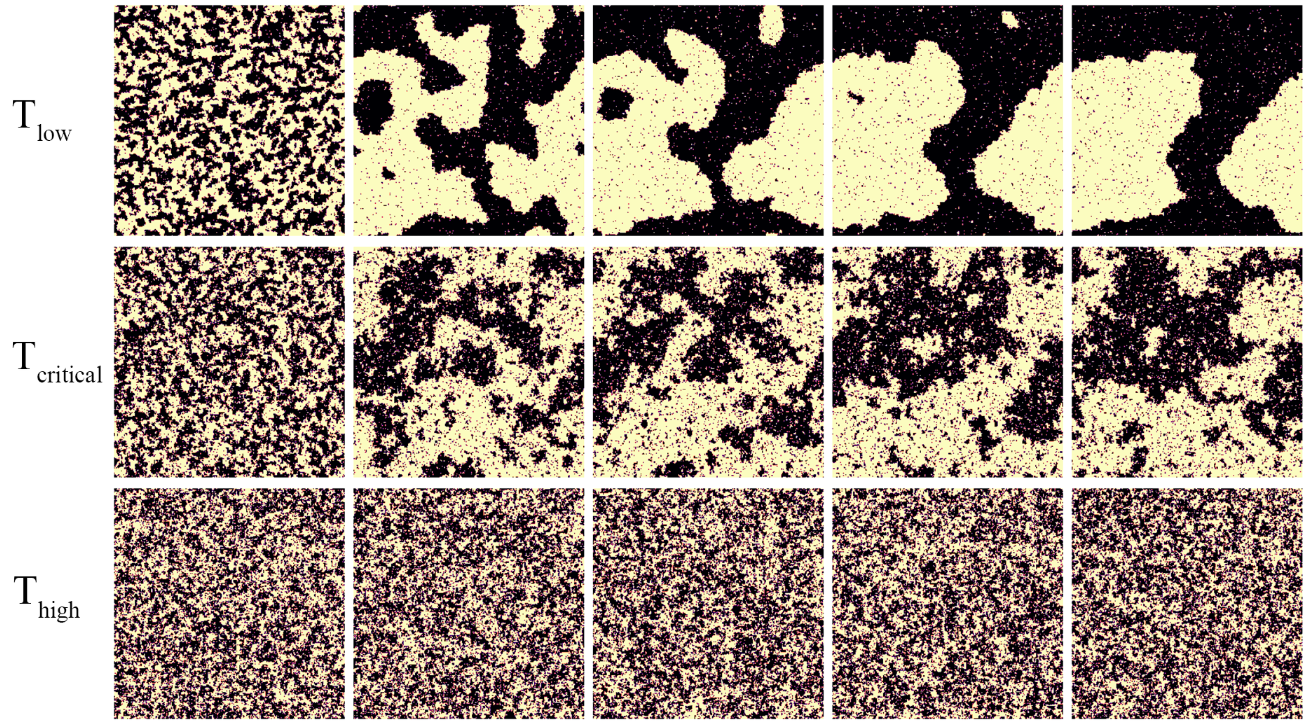
Figure 1.
Figure 1. illustrates the critical point of a phase transition between an ordered and disordered state. Tlow is an ordered state, Thigh is a disordered state and Tcritical is at the critical point between them. These states are models of the states in a ferromagnetic material, this model of ferromagnetism is called the 2D Ising model. Each node on the grid has a -1 (white pixel) or +1 (black pixel) spin. These nodes are updated, with each pixel tending to align with its neighbours but occasionally flipping at random, simulating thermal fluctuations. At low temperatures, this flipping is uncommon and the system will tend to align its spins and create the kind of macroscopic order seen in Tlow . At high temperatures, the probability of each node flipping becomes higher creating the kind of macroscopic chaos seen in Thigh. At the critical temperature, Tcritical , the system possesses no macroscopic or microscopic ordering, its fluctuations in order are scale invariant.
If systems exhibit scale invariance then structures/fluctuations seen at one scale should be seen at every other scale with a strength proportional to the scaling factor, these kinds of laws are called power laws. Systems operating in a regime that produces a power law distribution are said to be at or near the critical point (Beggs, 2007). Therefore, empirical evidence that the brain operates near a critical point typically involves showing power law distributions in neural activity measurements.
Evidence for Criticality
Evidence of power law distributions in the brain exists across different experimental modalities and scales of measurement. In humans: fMRI (Tagliazucchi et al. 2012, Tagliazucchi et al. 2016), EEG and MEG (Fagerholm et al. 2015, Jannesari et al. 2020, Lombard et al. 2021, Shriki et al. 2013) demonstrate such power law distributions. In animals in vivo: calcium and voltage imaging (Adrián Ponce‐Alvarez et al. 2018, Fagerholm et al. 2016, Bellay et al. 2016), multi-unit recordings (Hahn et al. 2017, Priesemann 2014, Wilting and Priesemann 2019) and in vitro local field potential measurements (Beggs and Plenz 2003, Gireesh and Plenz 2008) demonstrate such power law distributions. Importantly, there is evidence of power law distributions in functionally specialised brain regions. In other words, even isolated functional areas show activity patterns consistent with operating near a critical point. Shew et al. (2015) demonstrate that in an ex vivo preparation of the visual cortex of a turtle eye attached whole-brain, long-duration recordings of population neural activity (using a microelectrode array) follow a power law distribution providing relevant evidence that functionally isolable systems, such as the visual cortex, operate near a critical point.
It should be noted that while such evidence is widespread, the assumption that power law scaling entails operation near criticality does not come without caveats. For example, techniques directly measuring neural activity that aim to show an area is operating near criticality will measure neuronal avalanches, cascades of activity whose size and duration follow a power law. Touboul and Destexhe (2010) show that if criticality is identified purely by neuronal avalanches with the appearance of a linear regression on logarithmic axes, then simulated neural systems with stochastic threshold dynamics can erroneously be identified as organising to criticality. Fortunately, more rigorous statistical analysis can show a difference between these kinds of systems, and so, such analysis becomes standard. However, given the breadth and recency of evidence for criticality, the assumption that power law scaling entails operation at criticality should be taken with caution and remain subject to methodological considerations.
Benefits of Criticality
Operation near or at criticality endows systems with informational benefits, these benefits aid in explaining some of the brain’s informational capabilities and so motivate the hypothesis that the brain operates near a critical point (Shew and Plenz, 2012). Some of the benefits of criticality are proven experimentally and some are proven in models of non-neural critical systems. As models of criticality with varying structure and design on a smaller scale converge to similar behaviour at a larger scale, critical phenomena are considered intrinsically universal (Rodriguez, 2021). This universality enables results from non-neural models of critical systems to be robustly transferable to neural models of critical systems and so some arguments for the informational benefits of criticality in the brain are evidenced by behaviours of critical models from other domains. In the aforementioned Ising model, temperature is the parameter that controls the degree of order and disorder in the system, however, other systems displaying critical phenomena may use an alternative parameter. In neural systems, the parameter used to control the degree of order and disorder in the system will typically appear as the tendency for activity to propagate. A high tendency for activity to propagate leads to runaway excitation that creates macroscopic chaos and a decreased tendency for activity to propagate leads to suppressed activity that is more ordered as it establishes stable regions of activation or quiescence.
At criticality, dynamic range is maximised. A system’s dynamic range is the span of different input signals that it can process. Generally, a greater dynamic range entails a greater proficiency in responding to the environment as more stimuli can be differentiated and reacted to accordingly. In systems with macroscopic order, local changes have little effect because variations in input are strongly suppressed, preventing them from propagating through the system and producing distinguishable responses, thereby compressing the range of stimuli that can be differentiated. In systems with macroscopic chaos, local changes create runaway excitation causing the system to respond maximally regardless of input, making a range of changes impossible to distinguish from each other. Systems operating near criticality are thus optimal for distinguishing the widest range of signals as they are scale invariant and so avoid energetic predispositions present in ordered and chaotic systems that would otherwise reduce the ability to distinguish transferred information. Gautman et al. (2015) show this to be the case experimentally through pharmacologically modulating the cortical state of an anesthetised rat. Induced inhibitory states are equivalent to subcritical (close to order) regimes, excitatory states are equivalent to supercritical (close to disorder)- regimes and balanced states equivalent to critical regimes. Measuring the dynamic range in natural and induced subcritical, critical and supercritical regimes shows that as predicted, dynamic range is measured to be largest in the critical regime.
At criticality, fidelity of information is maximised. One way to assess fidelity is through mutual information. Mutual information measures how strongly inputs and outputs are statistically related, indicating how reliably information about the input is reflected in the system’s response. A high fidelity of information is important because it ensures that the system can accurately represent and transfer the details of the input it receives. It is difficult to quantify this information loss as fidelity depends on multiple stimulus and response dimensions that are jointly encoded, making it hard to isolate where and how much degradation has occurred. Therefore, a class of cellular automata that display critical phenomena are leveraged as a means of easily measuring the effects of criticality on mutual information loss. Li et al. (2002) measure mutual information as a spatial correlation between separate parts of the configuration of a 1D, 2 state, 11 neighbour cellular automata. Spatial correlations in the system's configuration serve as a proxy for mutual information, as they quantify the degree to which the behavior of separate parts of the cellular automaton is linked. When spatial correlations are strong, it indicates that the transfer of information between different regions is efficient. In this way, correlation in the behaviour of separate parts occurs only when little information is lost between states. Their results show that, on average, mutual information is maximised between different cells in cellular automata rules that are critical. Critical rules being those that are interposed between periodic rules, rules that create ordered states, and chaotic rules, rules that create disordered states.
At criticality, information capacity is maximised. Information capacity is a measure of how informative a system can be past its inputs. Measuring informational capacity suffers from a similar problem to measuring informational fidelity in that pinpointing how informative any state is, is difficult, much less a range of states compared to one another. Therefore, a popular method for measuring informational capacity is doing so in terms of entropy. Imagine reading the purchases from a restaurant, seeing the same few orders or seeing the same order repeatedly would make the purchases easy to predict, entropy is a measure of this predictiveness. A low entropy refers to a high predictability. When measuring the states of a system, one observes how many possible states are observed and how often these states repeat to determine the entropy. High entropy here does not indicate disorder, instead it is the ability of the system to occupy many distinguishable states without those states becoming redundant or random. Distinguishing more states incurs similar benefits for a system as maximising dynamic range. Shew et al. (2011) show that in cortex cultures, anaesthetised rats and awake macaque monkeys, entropy is maximised when excitation and inhibition is balanced i.e. conditions for operating near or at criticality. Their results show that when a neural system tends to inhibition, correlation between neuron firing is low and neural activity is low and when a neural system tends to excitation, correlation between neuron firing is high and so is activity. Entropically, neither outcome is ideal, low neural activity limits the number of possible states of the system and high correlation between neuron firing makes the system more predictable. This is why, across all systems, the highest entropy was measured to be when excitation and inhibition is balanced and so operating in a regime that is near a critical point.
Together, the demonstrated informational benefits of operating near criticality and evidence of neural systems operating near criticality provide strong motivation for taking the criticality hypothesis to be true. The expanse of evidence for criticality in the brain, from whole-brain fMRI to in vitro tissue recording, shows that, like massive modularity, criticality is an architecture that pervades the entire brain.
Modularity
The massive modularity hypothesis puts forward that the mind is modular throughout. Carruthers (2006, p. 62) is a chief defender of massive modularity, offering the following formulation of what constitutes a module:
“All of these systems will need to be frugal in their operations, hence being encapsulated in the wide‐scope sense, at least (some modules will no doubt be encapsulated in the stronger narrow‐scope sense). Moreover, the processing that takes place within each of these systems will generally be inaccessible elsewhere. Only the results, or outputs, of that processing will be made available for use by other systems.”
The notions of wide-scope and narrow-scope call for explication. Wide-scope encapsulation refers to a system that is unable to access some amount of exogenous information over the course of its operation and narrow-scope encapsulation refers to a system that is unable to access any exogenous information over the course of its operation. Also, for Carruthers, frugality refers to computational processes that are economical, both in the amount of information required in operation, and in the complexity of the algorithm that is implemented.
Modular organisation is observed at every spatial scale in biological neural networks (Meunier et al. 2010) and evidence showing this is ubiquitous and uncontroversial. However, evidence of systems in the brain with very general or integrative functions (such as decision-making, belief fixation, and reasoning) do not clearly support modular organisation (Bertolero et al. 2018). As a result, the case for modularity in these “central systems” rests largely on theoretical arguments and debate rather than on empirical evidence. In the following section, I reconstruct an argument for a massively modular organisation that conveys its explanatory ambitions and the tensions they give rise to.
Ambition of Massive Modularity
One of the most motivating arguments for massive modularity is the argument from computational tractability. Though the argument is in favour of massive modularity, its parts interestingly originate from Jerry Fodor (1983) who argues against the modularity of central processes. I will use Carruthers formulation of the argument here for ease:
(1) The mind is computationally realized.
(2) All computational mental processes must be suitably tractable.
(3) Only processes that are informationally encapsulated are suitably tractable.
(4) So the mind must consist entirely of encapsulated computational systems.
Carruthers (p. 45, 2006)
The first assumption is by no means indisputable, however, it has proven greatly efficacious for cognitive science and as it remains so, it does not appear productive to question. The second assumption concerns tractability, a problem is considered intractable if it requires impractical time or resources to solve (Hopcroft et al. 2001). Given mental processes do indeed solve problems in finite times, typically on a timescale of fractions of a second to seconds, it is agreeable that mental processes must be suitably tractable.
The third assumption is less simple. Some problems are intractable because solving them requires isolating the correct computation from many possible computations and this isolation requires considering many distinct states. Problems that are tractable do not suffer from the same problem because the structure of states constrain which computations can apply. Fodor (2000) calls this constraint locality and in local systems, the rules that apply to a state depend only on the internal structure of said state. Alternative to locality is globality, in global systems the rules that apply to a state depend on the relations between states of the system, or on the system as a whole. When we assume the mind is computationally realised, we assume it to be like classic computational systems that operate locally. Importantly, local systems become intractable when tasked with computing global properties. This is because local systems consider distinct states in isolation and determining the relations between states requires an operation for each relation. As the number of relations grows exponentially with the number of states of the system, unreasonably large numbers of operations are required when considering systems with many states.
The issue arises when considering that central processes appear to be global as planning or reasoning over a problem requires consulting a huge amount of context dependent, i.e. relational, information to determine a solution. For example, imagine planning a holiday with friends and considering some possible destinations. One typically considers: price, weather, safety, culture, travel times, food and landmarks and these factors can be informed by anecdotes, reading, films or news. Each piece of information must be understood within a wider network of beliefs to reach a conclusion, similar to the case of computing a global property. So, if our mental computation is local and tractable, how do central processes compute the global properties necessary for solving reasoning, planning and decision-making tasks? The third proposition of the argument from tractability claims that the answer is informational encapsulation and prima facie, informational encapsulation is a well-motivated thesis. It is after all faster to plan a holiday if you don’t think about how the weather will impact the food. This line of reasoning largely makes up the original appeal of modularity; informational encapsulation limits the scope of computation, making operations less vulnerable to the combinatorial explosion associated with access to global information. However, this solution introduces tension between informational encapsulation and the flexibility required for central processes.
Tension between Encapsulation and Flexibility
Humans are highly sensitive to context, the aforementioned example of choosing a travel destination highlights how many factors a decision is sensitive to, in this sense we are context-sensitive. Thus, in a single instance of planning or imagination it’s clear that large amounts of information is drawn on and across multiple instances, massive amounts of information must be available to the systems responsible. To be clear, humans are cognitively flexible in a multitude of ways, however these properties are salient and clearly in tension with informational encapsulation, thus making them useful points of discussion regarding the tension between cognitive flexibility and massive modularity.
Sperber (2005) suggests context sensitivity is reconciled with massive modularity by a mechanism of competition between modules that works like so. When activated, modules compete with one another to have the output of their contents flow downstream to decision-making systems or other modules. Therefore, our ability to be context sensitive is a product of the continued activation of modules handling information relevant to a problem. Such a solution is simple though the notion of competition begins to take on an uncomfortably large computational burden when considering its use. For example when planning my holiday destination, why do I not consider every country? Sperber would answer that I do not consider countries that have lost an informational competition prior to my decision-making and planning. However, the competition responsible for differentiating all countries from possible holiday destinations appears to require sensitivity to many of the same context-dependent factors like safety, cost and food that would be used by later stages of selection and judgement. If so, the competitive filtering stage does not avoid global computation but merely displaces it, undermining its supposed tractability advantage. I bring this up to show that, in coping with tension between encapsulation and flexibility, massive modularists often rely on an assumption that summatively, simple processes can solve complex problems. That is, they assume problems to be extremely prone to decomposition. How disagreeable this assumption is depends on how much one considers planning and reasoning problems to be decomposable and how capable the simple processes that operate at the joints of modules are. It is, however, currently difficult to quantify how prone to decomposition cognitive problems are. Thus this assumption is by no means incorrect but it is certainly uneasy to consider as applicable to every cognitive problem.
The benefits of Modularity and Criticality
I have presented arguments for the criticality hypothesis and the massive modularity hypothesis, two theories that place constraints on cognitive organisation. Now I will argue that the hypotheses operate best in conjunction.
As shown, massive modularity struggles to resolve the tension between informational encapsulation and cognitive flexibility. The necessity of informational encapsulation originates from the third assumption in the argument from computational tractability:
(3) Only processes that are informationally encapsulated are suitably tractable.
My central claim is that the informational benefits of operating near criticality enable some processes to trade informational encapsulation for operating in a critical regime and remain suitably tractable. This trade need not be total. Recall that encapsulation is separated into wide-scope and narrow-scope by Carruthers, therefore we should simply expect wide-scope encapsulated modules to be those that make use of the benefits of operating near criticality. So, in practice, how do wide-scope encapsulated modules that operate in a critical regime resolve the prior tensions between massive modularity and cognitive flexibility?

Figure 2.
Firstly, with the benefits of a critical regime, we can assume our local computations to be far better at computing global properties and so less prone to intractability. This is because the states that computations operate over reflect more relations between other distinct states of the system when they have greater informational fidelity and capacity and maximise dynamic range. Consider assembling the jigsaw puzzle on the left in Figure 2. , if a piece is picked at random then it is hard to determine what pieces are conjoining based on the visual similarity between the picked piece and a random piece due to the similarity of the colours of all the pieces. This is because most pieces are not too distinctly different from one another. Compare this to assembling the jigsaw puzzle on the right in Figure 2. with the same method. The distinctiveness of the image makes it far easier to determine which pieces conjoin with our randomly picked piece because multiple features can be distinguished and identified as similar or dissimilar. This is an equivalent consequence of a greater fidelity of information. The eyes or stripes we might use in our process of judging similarity are multidimensional features that facilitate drawing the necessary distinctions for our problem. Assembling the puzzle on the right is also easier as it has fewer pieces. This is an equivalent consequence of a greater capacity of information. If we consider a puzzle as requiring some amount of information from each piece to solve. Then if the information per piece increases, the total number of pieces must decrease. To understand how maximising dynamic range offers equivalent aid, imagine one more puzzle, an identical puzzle to the one on the left of Figure 2. only far more saturated in colour. Determining what pieces are conjoining based on visual similarity would be far easier due to our metric of similarity, that is colour, distinguishing far more states from one another. This is an equivalent consequence of maximising dynamic range as the span of colour over our pieces is larger, this facilitates distinguishing pieces as, on average, there is greater distance between pieces colourwise. These examples illustrate how aforementioned informational benefits reduce the number of steps needed to determine relationships between parts of a system. Consequently, for a local system tasked with computing global properties, many problems that would otherwise be intractable can now be solved thanks to these benefits.
Our local systems being more capable at computing global properties than previously thought should lead us to question the necessity of massive modularist explanations of processes of this sort. As previously discussed, context-sensitivity is one of the properties of some flexible processes that aims to be reconciled with massive modularity. Then the question becomes, do systems operating in a critical regime aid in explaining context-sensitive computations?
Recall the use of spatial correlation between separate parts of the configuration as a measure of mutual information by Li et al. (2002) and the finding mutual information is maximised in a critical regime. Also recall that dynamic range is partly maximised by critical regimes lacking the kind of macroscopic order that would otherwise impede small-scale changes affecting the state of a system. In this way, a critical state naturally responds to small-scale changes and can carry contextual information across long distances in the system. A local perturbation in one module can influence, and be influenced by, the broader system activity without that module needing direct access to every contextual variable. This provides a mechanism by which context sensitivity can emerge from local processing, reducing the need to posit strictly global computation or exhaustive informational access.
Having now seen that, in some ways, operating in a critical regime can aid in explaining some of the tensions between massive modularity and informational encapsulation, we should ask, are there issues with posing the operation of a critical regime within a massively modular architecture?
Modularity and Criticality
Previously, I have discussed criticality using very simple system models. It is extremely important not to equate the lack of structural complexity in those simple models with a lack of order in actual critical regimes. The only property of a system that matters for whether it can operate in a critical regime is continuous phase change between an ordered state and a disordered state. I stress this because one might erroneously assume that the lack of order and disorder in a critical regime must mean that systems with inherent order or disorder cannot operate in critical regimes. If this were true, the critical brain hypothesis and massive modularity hypothesis would be thoroughly irreconcilable. Fortunately this is not the case. Synthetic hierarchical-modular networks (SHMNs) operating in a critical regime not only show such architecture is possible, they replicate key features of critical behaviour captured by fMRI in awake humans.
In their 2013 article, Griffiths phases and the stretching of criticality in brain networks, Moretti and Muñoz explain the finding of Tagliazucchi (2012) that models of criticality in the brain produced from fMRI recording show the brain as wandering in the region around the critical point at resting state. Moretti and Muñoz showed that a hierarchical, modular architecture induces the emergence of a Griffiths Phase (GP) in the system. A GP is essentially an extended critical region that spans a finite interval of the order parameter, rather than a single critical point. In a GP, the hallmarks of criticality, including functional advantages and power law distributions appear across this continuous phase.
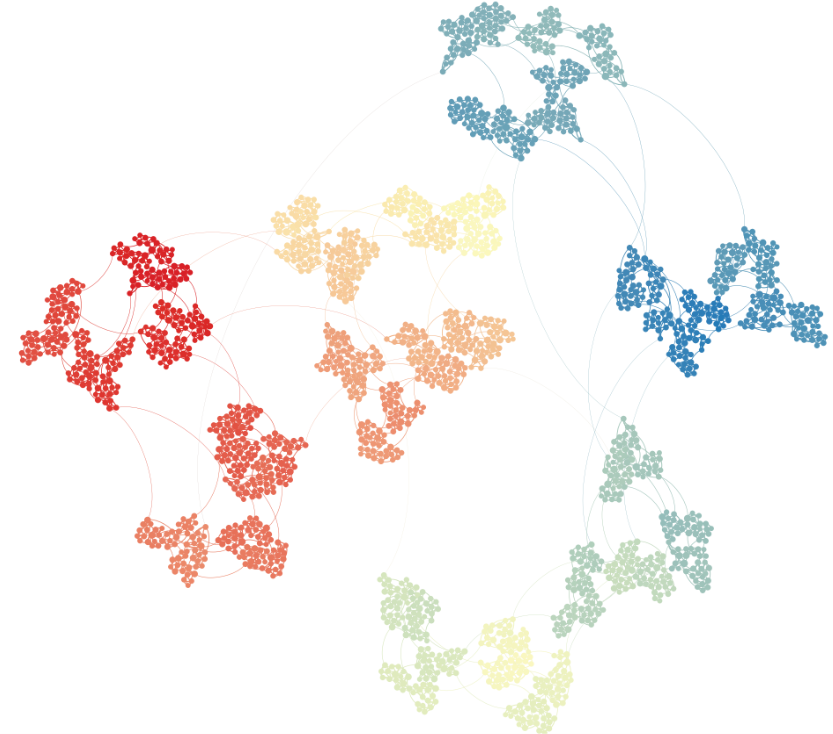
Figure 3. Copied from Moretti and Muñoz (2013)
GP’s emerge in SHMNs because local areas of the network can maintain order-parameter values that differ significantly from the global average. In practice, this means parts of the system can have their own local structure (and dynamics) without preventing the whole network from operating near the critical phase transition. Moretti and Muñoz provide evidence for GPs in SHMNs by introducing a parameter λ, which is analogous to temperature in the 2D Ising model. There is a critical value of λ: if λ is set higher than this value, activity propagates throughout the network (a supercritical state), whereas if λ is set lower, activity dies out (a subcritical state). They then show that a small, localised perturbation in the network produces cascades of activity that follow a power law distribution over a broad range of λ values. This power law behavior across many λ values is a clear signature of a Griffiths Phase.
This finding is important for the reconciliation of massive modularity with criticality as it shows that modular architecture is not problematic for criticality, it is in fact necessary to explain some of the empirical evidence of criticality in the brain. Furthermore, a critical regime that operates with local regions of order parameters that vary from the global average is important in explaining how parts of the brain encode and respond to stimuli while criticality is maintained. Modular structure provides the mechanism for this heterogeneity as it allows different subsystems to transiently occupy ordered states without collapsing the system into global supercritical or subcritical regimes. This is because low-dimensional encodings of stimulus, such as those found in the olfactory system and visual system (Barreiro et al. 2023), are ordered. If we were forced to assume all regions of the brain operated between phase transitions all the time, we could not explain such localised order.
Conclusion
The thesis I defend is that the criticality hypothesis can be reconciled with a massively modular architecture of the mind. Operating near criticality confers clear informational advantages including maximised dynamic range, informational fidelity, and capacity. These advantages undermine the motivation for strict informational encapsulation. Systems operating in a critical regime can thus remain tractable while drawing on broader contextual information, thereby easing the tension between encapsulation and the cognitive flexibility required for central processes such as planning and decision-making.
Synthetic models of hierarchical and modular networks demonstrate that modular structure does not obstruct critical behaviour. The emergence of Griffiths phases in such networks shows how local order and functional specialisation can coexist with global near-critical dynamics. This provides an explanation of how functionally specialised regions can exhibit order while remaining embedded in a system that displays scale invariant activity. Massive modularity, in this view, is not a rival to criticality but one of the structural conditions that makes extended critical regimes possible in biological brains.
The resulting picture rejects any forced choice between critical systems and modular ones. Instead, the brain plausibly realises a hybrid architecture that is hierarchically modular, locally specialised, and globally poised near criticality. This architecture preserves the explanatory strengths of massive modularity while accommodating the growing body of empirical evidence for critical dynamics.
Bibliography
Adrián Ponce‐Alvarez, Jouary, A., Privat, M., Deco, G. and Germán Sumbre (2018). Whole-Brain Neuronal Activity Displays Crackling Noise Dynamics. Neuron, 100(6), pp.1446-1459.e6. doi:https://doi.org/10.1016/j.neuron.2018.10.045.
Barreiro, A.K., Fontenele, A.J., Ly, C., Raju, P.C., Shree Hari Gautam and Shew, W.L. (2023). Sensory input to cortex encoded on low-dimensional periphery-correlated subspaces. PNAS nexus, 3(1). doi:https://doi.org/10.1093/pnasnexus/pgae010.
Beggs, J.M. and Plenz, D. (2003). Neuronal Avalanches in Neocortical Circuits. The Journal of Neuroscience, 23(35), pp.11167–11177. doi:https://doi.org/10.1523/jneurosci.23-35-11167.2003.
Beggs, J. (2007). Neuronal avalanche. Scholarpedia, [online] 2(1), p.1344. doi:https://doi.org/10.4249/scholarpedia.1344.
Beggs, J.M. (2022) ‘Addressing skepticism of the critical brain hypothesis’, Frontiers in computational neuroscience, 16. Available at: https://doi.org/10.3389/fncom.2022.703865.
Bellay, T., Klaus, A., Seshadri, S. and Plenz, D. (2015). Irregular spiking of pyramidal neurons organizes as scale-invariant neuronal avalanches in the awake state. eLife, 4. doi:https://doi.org/10.7554/elife.07224.
Bertolero, M.A., Yeo, B.T.T., Bassett, D.S. and D’Esposito, M. (2018). A mechanistic model of connector hubs, modularity and cognition. Nature Human Behaviour, 2(10), pp.765–777. doi:https://doi.org/10.1038/s41562-018-0420-6.
Carruthers, P. (2006). The architecture of the mind: Massive modularity and the flexibility of thought. Clarendon Press/Oxford University Press. https://doi.org/10.1093/acprof:oso/9780199207077.001.0001.
Fagerholm, E.D., Lorenz, R., Scott, G., Dinov, M., Hellyer, P.J., Mirzaei, N., Leeson, C., Carmichael, D.W., Sharp, D.J., Shew, W.L. and Leech, R. (2015). Cascades and Cognitive State: Focused Attention Incurs Subcritical Dynamics. The Journal of Neuroscience, 35(11), pp.4626–4634. doi:https://doi.org/10.1523/jneurosci.3694-14.2015.
Fagerholm, E.D., Scott, G., Shew, W.L., Song, C., Leech, R., Knöpfel, T. and Sharp, D.J. (2016). Cortical Entropy, Mutual Information and Scale-Free Dynamics in Waking Mice. Cerebral Cortex, 26(10), pp.3945–3952. doi:https://doi.org/10.1093/cercor/bhw200.
Fodor, J.A. (1983). The Modularity of Mind. The MIT Press. doi:https://doi.org/10.7551/mitpress/4737.001.0001.
Fodor, J.A. (2000). The Mind Doesn’t Work That Way. The MIT Press. doi:https://doi.org/10.7551/mitpress/4627.001.0001.
Gautam S., Hoang, T.T., McClanahan, K., Grady, S.K. and Shew, W.L. (2015). Maximizing Sensory Dynamic Range by Tuning the Cortical State to Criticality. PLOS Computational Biology, 11(12), pp.e1004576–e1004576. doi:https://doi.org/10.1371/journal.pcbi.1004576.
Gireesh, E.D. and Plenz, D. (2008). Neuronal avalanches organize as nested theta- and beta/gamma-oscillations during development of cortical layer 2/3. Proceedings of the National Academy of Sciences, 105(21), pp.7576–7581. doi:https://doi.org/10.1073/pnas.0800537105.
Hahn, G., Ponce-Alvarez, A., Monier, C., Benvenuti, G., Kumar, A., Chavane, F., Deco, G. and Frégnac, Y. (2017). Spontaneous cortical activity is transiently poised close to criticality. PLOS Computational Biology, 13(5), p.e1005543. doi:https://doi.org/10.1371/journal.pcbi.1005543.
Hopcroft, J.E., Motwani, R. and Ullman, J.D. (2001). Introduction to automata theory, languages, and computation, 2nd edition. ACM SIGACT News, 32(1), p.368. doi:https://doi.org/10.1145/568438.568455.
Jannesari, M., Saeedi, A., Zare, M., Ortiz-Mantilla, S., Plenz, D. and Benasich, A.A. (2020). Stability of neuronal avalanches and long-range temporal correlations during the first year of life in human infants. Brain Structure and Function, 225(3), pp.1169–1183. doi:https://doi.org/10.1007/s00429-019-02014-4.
Li, W., Packard, N.H. and Langton, C.G. (2002). Transition phenomena in cellular automata rule space. Physica D: Nonlinear Phenomena, [online] 45(1-3), pp.77–94. doi:https://doi.org/10.1016/0167-2789(90)90175-O.
Lombardi, F., Shriki, O., Herrmann, H.J. and de Arcangelis, L. (2021). Long-range temporal correlations in the broadband resting state activity of the human brain revealed by neuronal avalanches. Neurocomputing, 461, pp.657–666. doi:https://doi.org/10.1016/j.neucom.2020.05.126.
Meunier, D., Lambiotte, R. and Bullmore, E.T. (2010). Modular and Hierarchically Modular Organization of Brain Networks. Frontiers in Neuroscience, 4. doi:https://doi.org/10.3389/fnins.2010.00200.
Moretti, P. and Muñoz, M.A. (2013). Griffiths phases and the stretching of criticality in brain networks. Nature Communications, 4(1). doi:https://doi.org/10.1038/ncomms3521.
Priesemann, V. (2014). Spike avalanches in vivo suggest a driven, slightly subcritical brain state. Frontiers in Systems Neuroscience, 8. doi:https://doi.org/10.3389/fnsys.2014.00108.
Shew, W.L., Clawson, W.P., Pobst, J., Karimipanah, Y., Wright, N.C. and Wessel, R. (2015). Adaptation to sensory input tunes visual cortex to criticality. Nature Physics, 11(8), pp.659–663. doi:https://doi.org/10.1038/nphys3370.
Rodriguez, Q. (2021). Idealizations and analogies: Explaining critical phenomena. Studies in History and Philosophy of Science Part A, 89, pp.235–247. doi:https://doi.org/10.1016/j.shpsa.2021.08.007.
Shew, W.L., Clawson, W.P., Pobst, J., Karimipanah, Y., Wright, N.C. and Wessel, R. (2015). Adaptation to sensory input tunes visual cortex to criticality. Nature Physics, 11(8), pp.659–663. doi:https://doi.org/10.1038/nphys3370.
Shew, W.L. and Plenz, D. (2012). The Functional Benefits of Criticality in the Cortex. The Neuroscientist, 19(1), pp.88–100. doi:https://doi.org/10.1177/1073858412445487.
Shew, W.L., Yang, H., Yu, S., Roy, R. and Plenz, D. (2011). Information Capacity and Transmission Are Maximized in Balanced Cortical Networks with Neuronal Avalanches. The Journal of Neuroscience, 31(1), pp.55–63. doi:https://doi.org/10.1523/jneurosci.4637-10.2011.
Shriki, O., Alstott, J., Carver, F., Holroyd, T., Henson, R.N.A., Smith, M.L., Coppola, R., Bullmore, E. and Plenz, D. (2013). Neuronal Avalanches in the Resting MEG of the Human Brain. The Journal of Neuroscience, 33(16), pp.7079–7090. doi:https://doi.org/10.1523/jneurosci.4286-12.2013.
Tagliazucchi, E., Balenzuela, P., Fraiman, D. and Chialvo, D.R. (2012). Criticality in Large-Scale Brain fMRI Dynamics Unveiled by a Novel Point Process Analysis. Frontiers in Physiology, 3. doi:https://doi.org/10.3389/fphys.2012.00015.
Tagliazucchi, E., Chialvo, D.R., Siniatchkin, M., Amico, E., Brichant, J.-F., Bonhomme, V., Noirhomme, Q., Laufs, H. and Laureys, S. (2016). Large-scale signatures of unconsciousness are consistent with a departure from critical dynamics. Journal of The Royal Society Interface, 13(114), p.20151027. doi:https://doi.org/10.1098/rsif.2015.1027.
Touboul, J. and Destexhe, A. (2010). Can Power-Law Scaling and Neuronal Avalanches Arise from Stochastic Dynamics? PLoS ONE, 5(2), p.e8982. doi:https://doi.org/10.1371/journal.pone.0008982.
Wilting, J. and Priesemann, V. (2019). Between Perfectly Critical and Fully Irregular: A Reverberating Model Captures and Predicts Cortical Spike Propagation. Cerebral Cortex, 29(6), pp.2759–2770. doi:https://doi.org/10.1093/cercor/bhz049.
